
Relocating to Raleigh: How to Choose an ITB Neighborhood
Choose an Inside the Beltline neighborhood by deciding three things first: how walkable you want daily life to be, whether you want an older home or a new one, and how much yard you need. Those three answers narrow Raleigh's central neighborhoods to a short list you can tour in a weekend.
The Short Answer
Choose an Inside the Beltline neighborhood by deciding three things first: how walkable you want daily life to be, whether you want an older home or a new one, and how much yard you need. Those three answers narrow Raleigh's central neighborhoods to a short list you can tour in a weekend.
"Inside the Beltline" (ITB) means the neighborhoods within the I-440 loop around central Raleigh. It is not one market. Five Points, Hayes Barton, Mordecai, Oakwood, Boylan Heights, Glenwood-Brooklyn, Anderson Heights, University Park, Budleigh, Country Club Hills, and North Hills each have different streets, homes, and rhythms, and the right one depends on how you live.
I am Anne Godwin, a broker and co-owner of Insight Real Estate in Raleigh. I have spent 10 years helping buyers and sellers in these neighborhoods, many of them relocating from out of state. This guide is how I walk relocation clients through the choice.
What each neighborhood is like
Five Points
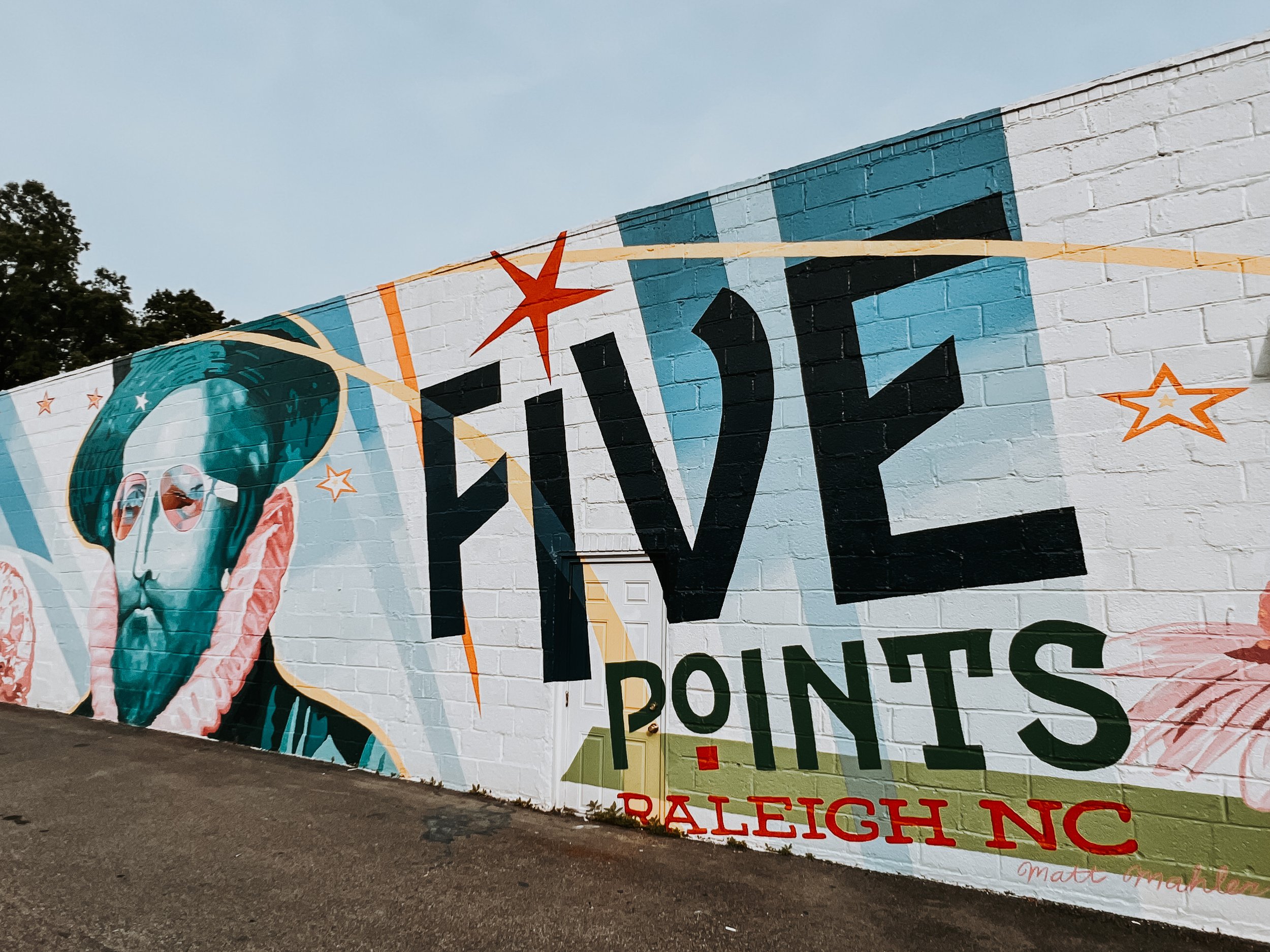
Five Points centers on the intersection of Glenwood Avenue, Fairview Road, and Whitaker Mill Road. It is made up of Hayes Barton, Bloomsbury, Georgetown, Vanguard Park, and Roanoke Park, all platted between the 1910s and the early 1920s. It has the small-town feel buyers often picture when they imagine a walkable Raleigh neighborhood, with independent shops and restaurants close by. Inventory stays tight, so be ready to move when the right house appears.
Hayes Barton
Hayes Barton was designed by landscape architect Earle Sumner Draper, with roads that follow the contours of the land, and was added to the National Register of Historic Places in 2002. Colonial Revival and Classical Revival homes set the tone. It is widely considered one of Raleigh's most prestigious residential neighborhoods, and homes here rarely come to market. If it is on your list, the best preparation is working with an agent who hears about homes early.
Mordecai
Mordecai Place was subdivided starting in 1916 and was listed on the National Register of Historic Places in 1998. The mix of styles is wide: bungalows, Colonial Revival, Tudor Revival, Cape Cods, and more. Mordecai also has new construction mixed in with the historic homes, which makes it a good place to compare the two side by side. I wrote more in Living in Mordecai.
Historic Oakwood
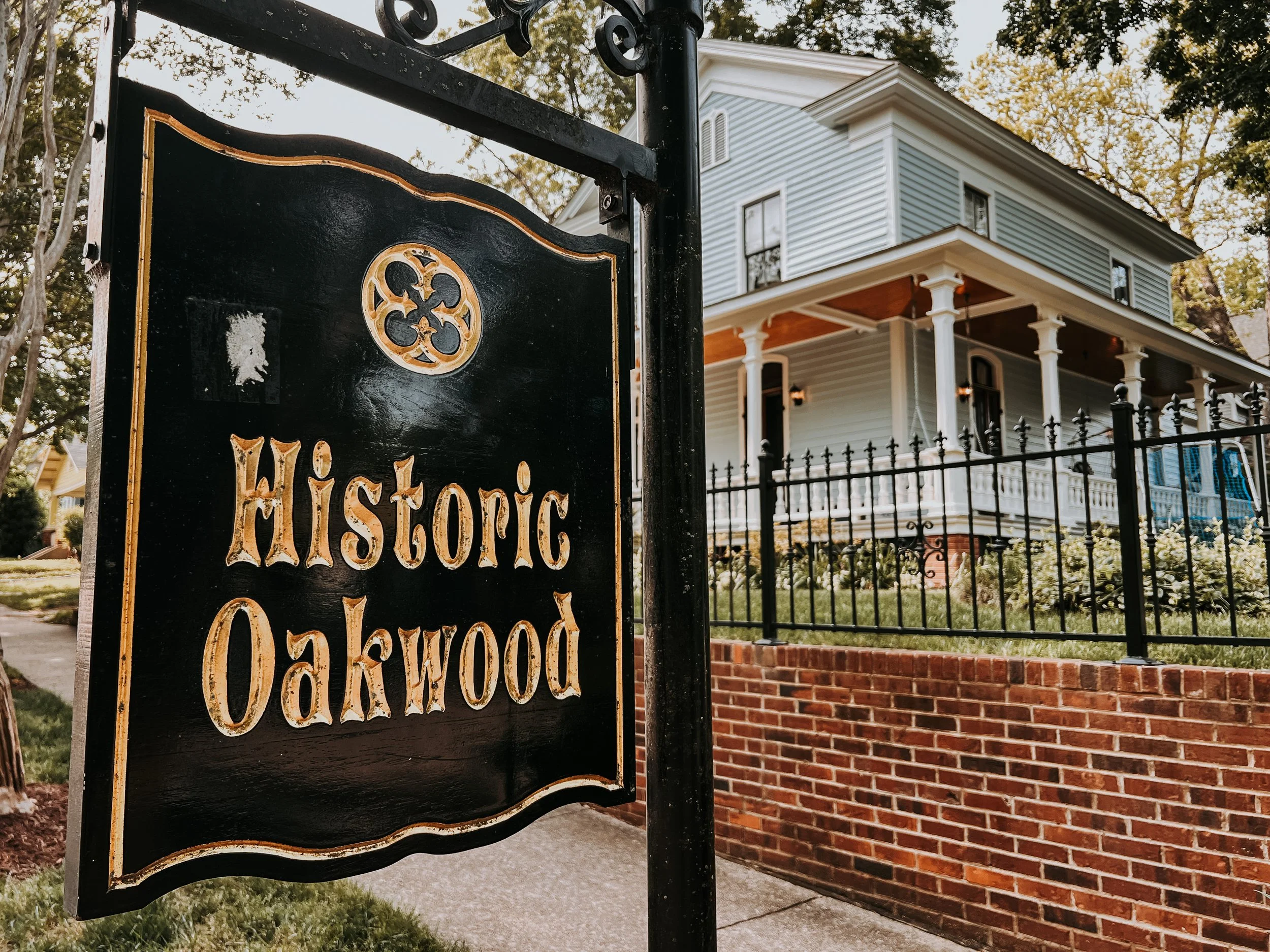
Oakwood is Raleigh's first local historic district and has been described as the largest intact 19th-century residential neighborhood in North Carolina. Most homes were built between 1890 and 1930, from Queen Anne Victorians to modest bungalows. It sits downtown, so you can walk to restaurants, parks, and Historic Oakwood Cemetery. Because it is a historic district, ask early about what review applies to exterior changes if you plan to renovate.
Boylan Heights
Boylan Heights was developed between 1907 and 1935 and is one of Raleigh's earliest planned suburbs. It sits about a ten-minute walk from the State Capitol and was added to the National Register of Historic Places in 1985. The historic district has 252 contributing buildings in Queen Anne, Colonial Revival, and Craftsman styles, and the neighborhood hosts an annual art walk in December. It is a strong choice if you want historic character and walkable access to downtown restaurants.
Glenwood-Brooklyn
The Glenwood-Brooklyn Historic District runs along Glenwood Avenue between Peace Street and Wade Avenue. It began as an early 20th-century streetcar suburb, and its Queen Anne, Colonial Revival, and Craftsman homes were built between about 1907 and 1951. Some were ordered from catalogs such as Sears, Roebuck and Company. The district is also a local historic overlay district with its own design guidelines, and contributing properties may qualify for historic tax credits. If you plan to renovate, talk with the city's historic preservation office early.
University Park
University Park sits next to NC State University, within walking distance of Hillsborough Street and the Village District, and is anchored by Raleigh Little Theatre and its Rose Garden. Homes include cottages, bungalows, and 1950s ranches, with some newer infill. Blocks nearer campus include duplexes and triplexes used as student housing, so spend time on the specific street before you decide.
Anderson Heights
Anderson Heights sits just north of downtown, near Five Points and its restaurants. Its leafy streets have mature trees and large front lawns, and the homes include Georgian, Colonial Revival, mid-century, and classic bungalow styles. The neighborhood association hosts block parties and other events, and many residents work to keep the area's character intact. It is also where I live, so I can tell you what daily life here is like.
Budleigh
Budleigh is known for a calm, tree-lined setting, a mix of classic and updated homes, and a short trip to Five Points dining, Jaycee Park, and the greenway. It suits buyers who want quiet streets without giving up restaurants and parks. Insight Real Estate also offers custom-built homes at Budleigh East for buyers who want new construction in this part of town.
Country Club Hills
Country Club Hills sits near Ridge Road and Glenwood Avenue, close to North Hills and the Crabtree Creek Greenway. It is known for brick ranches and split-level homes on lots with mature oaks and dogwoods, and many have been updated. It is a good fit if you want yard space and mid-century architecture.
North Hills
Technically North Hills is not ITB but it is still one of the most desirable neighborhoods in Raleigh. North Hills has changed from a suburban shopping district into a mix of offices, shops, restaurants, and homes. Nearby you will find renovated 1960s and 1970s ranch houses as well as newer townhomes. Buyers choose it for convenience and for quick access to both downtown Raleigh and Research Triangle Park.
"Inside the Beltline" (ITB) means the neighborhoods within the I-440 loop around central Raleigh. It is not one market. Five Points, Hayes Barton, Mordecai, Oakwood, Boylan Heights, Glenwood-Brooklyn, Anderson Heights, University Park, Budleigh, Country Club Hills, and North Hills each have different streets, homes, and rhythms, and the right one depends on how you live.
FIVE QUESTIONS TO NARROW YOUR LIST
How walkable do you want your days to be? Decide whether you want to walk to dinner and coffee, or whether driving to them is fine. Five Points, Oakwood, Mordecai, and Boylan Heights lean walkable. Country Club Hills and parts of Budleigh trade some of that for yard and quiet.
Old house or new house? Historic homes bring character and sometimes surprises, like older systems and review rules in historic districts. New construction brings modern layouts and warranties, and a builder timeline. Neither is better, so walk through both and see which one fits.
How much yard do you need? If you have dogs, kids, or a garden, lot size may decide the neighborhood for you. Ask to see lots, not just houses.
What does your commute look like? Map the drive from each neighborhood to your workplace at the time you will actually travel, not just the distance.
Which schools will serve the address? Wake County school assignments can change, so confirm the current assignment for any home you are serious about with the school district rather than relying on a listing.
Historic Oakwood Neighborhood

The Mordecai House
Planning Your Move From Out of Town
Tour your top three neighborhoods in one trip. Spend time on foot in each, at different times of day. Have coffee, walk the streets, and drive your commute.
Get pre-approved before you visit. Inside the Beltline homes can draw multiple offers within days of listing, so you want to be ready to act while you are in town.
Ask for early notice. Because inventory is tight in places like Five Points and Hayes Barton, an agent with local relationships can tell you about homes before they hit the market.
Consider new construction if inventory is thin. Presale, spec, and custom homes each follow a different timeline. I explain the differences in Build Your Dream Home: Custom, Spec, and Presale.
Use video for the first pass. A live video walkthrough can help you rule homes out before you travel, though I still recommend seeing a home in person before you make an offer.
How I help relocation buyers
I start with a conversation, not a tour. I ask how you spend a normal weekday, what you want your home to feel like, and what you are worried about, then build a short list of neighborhoods and homes to match. I am calm and low pressure, and I believe you get what you put into it. I built my own home in Anderson Heights, so I know the building process from the client's side.
Frequently asked questions
What does "Inside the Beltline" mean in Raleigh?
It refers to the neighborhoods inside the I-440 loop around central Raleigh, including Five Points, Hayes Barton, Mordecai, Oakwood, Boylan Heights, Glenwood-Brooklyn, Anderson Heights, University Park, Budleigh, and North Hills.
Which ITB neighborhood is best for walkability?
Five Points, Historic Oakwood, Mordecai, and Boylan Heights are good places to start for buyers who want to walk to restaurants, shops, and parks.
Where can I find new construction Inside the Beltline?
New homes are built on infill lots and in place of older houses in several neighborhoods, including Mordecai and Budleigh. Availability changes often, so ask your agent for current presale, spec, and custom options.
How competitive is the Inside the Beltline market?
Homes here can receive multiple offers within days of listing, and some neighborhoods rarely have inventory. Getting pre-approved and working with an agent who knows the streets helps you move quickly.
Should I visit before I buy?
I recommend at least one in-person visit to your top neighborhoods before you make an offer. Video tours can help you narrow the list first.
Ready to find your neighborhood?
Moving to Raleigh and not sure where to start? Tell me what a good weekday looks like for you and I will suggest two or three Inside the Beltline neighborhoods to explore. Text or call me at (919) 273-5051, or email anne@insightraleigh.com. What matters most to you in your next neighborhood?